
You want a cozy home, but vague labels like "soy blend" or "fragrance" hide what you actually breathe. Protecting your family and pets from headaches and soot starts with knowing which candle ingredients to avoid.
At 96NORTH, we design wellness-first, clean-burning options because indoor air comfort shouldn't require compromise. Here is your quick checklist to decode labels in two minutes, starting with the major red-flag ingredients.
1. The Petroleum Pitfall: Hidden Paraffin and Wax Blends
Does your candle leave dark soot on the jar or trigger headaches? These are immediate signs of cheap, petroleum-based waxes that disrupt your indoor air quality. When scanning ingredient labels, avoid these common red flags:
-
Paraffin
-
Petroleum wax
-
Mineral wax
-
Microcrystalline wax
These crude oil byproducts release soot and volatile organic compounds, triggering respiratory irritation in sensitive homes. If a brand hides its wax type behind a vague "wax blend," assume it contains petroleum and treat it as a caution flag.
Instead, protect your wellness sanctuary by choosing non-toxic bases:
-
100% soy wax
-
Coconut wax
-
Coconut-soy blend
-
Beeswax
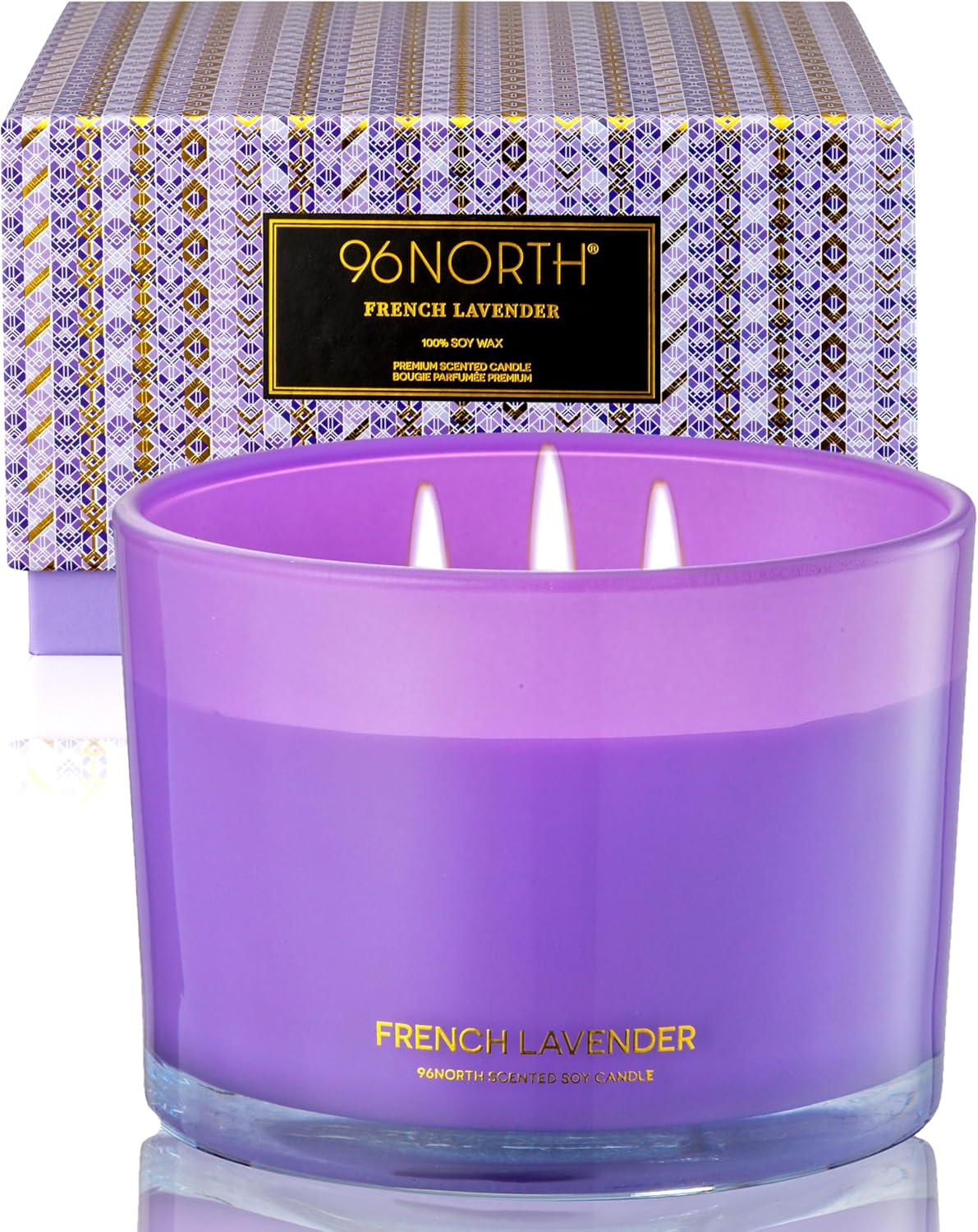
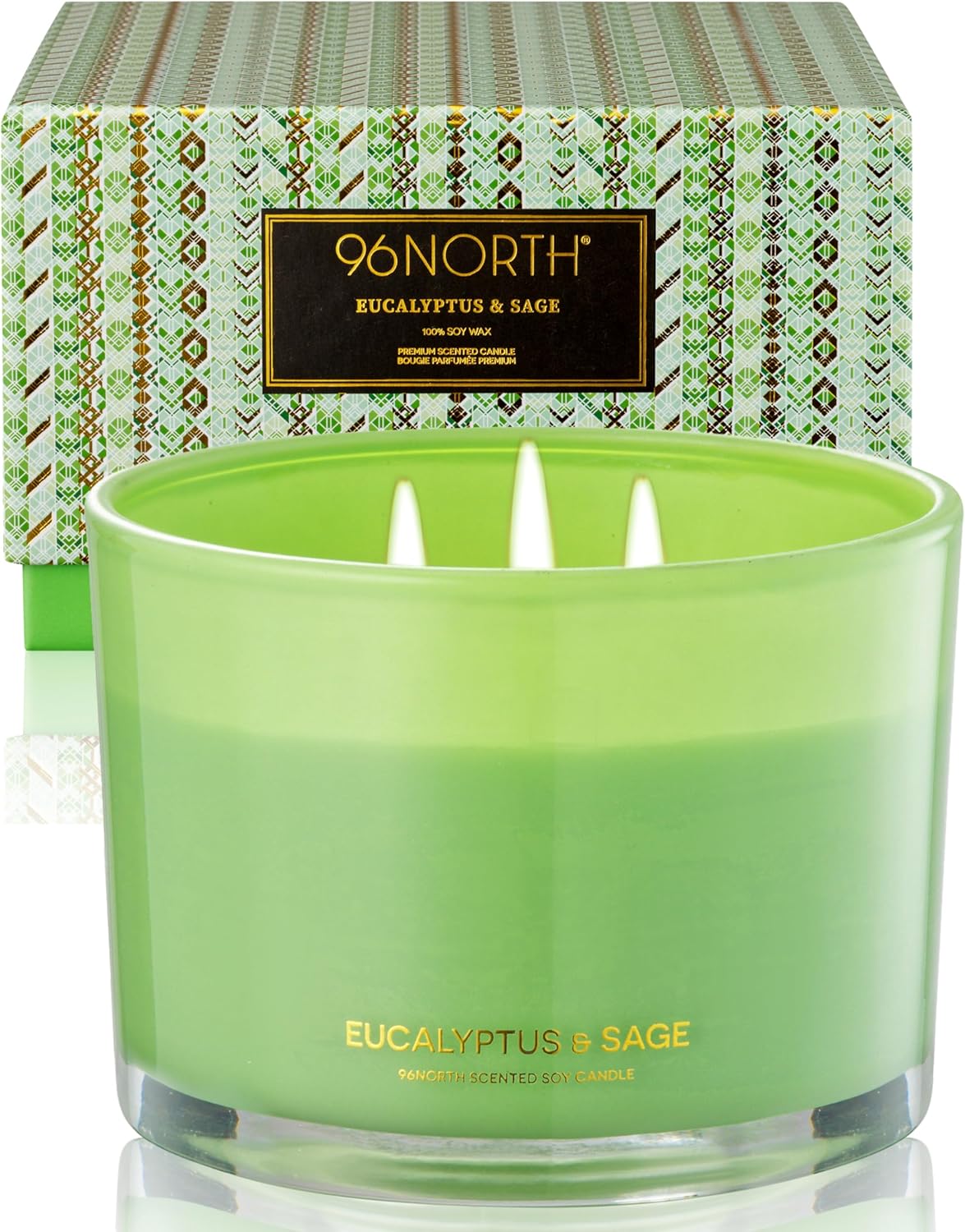
If you want a clearly stated, clean-burning choice for your home, browse 96NORTH.
2. The Fragrance Loophole: Unmasking "Proprietary Blends"
Headaches from burning candles often trace back to a single word on the label. Vague terms like “fragrance,” “parfum,” “fragrance oils,” or “proprietary blend” mask dozens of undisclosed synthetic chemicals. These are critical candle ingredients to avoid, as a lack of legal disclosure requirements makes it impossible to assess sensitivity risks.
When buying, protect your home sanctuary with these verification steps:
-
Verify the baseline: Look for clear "phthalate-free" labels.
-
Demand transparency: Prioritize "IFRA-compliant" formulations and allergen disclosures.
-
Request proof: Check the brand's FAQ or ask for a Safety Data Sheet (SDS).
Understanding how scented candles work helps you identify premium, clean formulations that support your wellness routine.
3. The "Phthalate-Free" Trap: Why One Clean Claim Isn't Enough
Many shoppers buy a "phthalate-free" candle, only to experience immediate sinus headaches. While avoiding phthalates is crucial for respiratory and reproductive health, this single claim often masks low-quality fragrance systems loaded with other toxic candle ingredients to avoid.
Establish this clear decision rule for your home wellness routine:
-
The Gold Standard: Choose brands that pair "phthalate-free" with broader screening standards that explicitly exclude known carcinogens and reproductive toxins.
-
The Yellow Flag: If a brand only claims "phthalate-free" and nothing else, treat it as a warning and keep comparing.
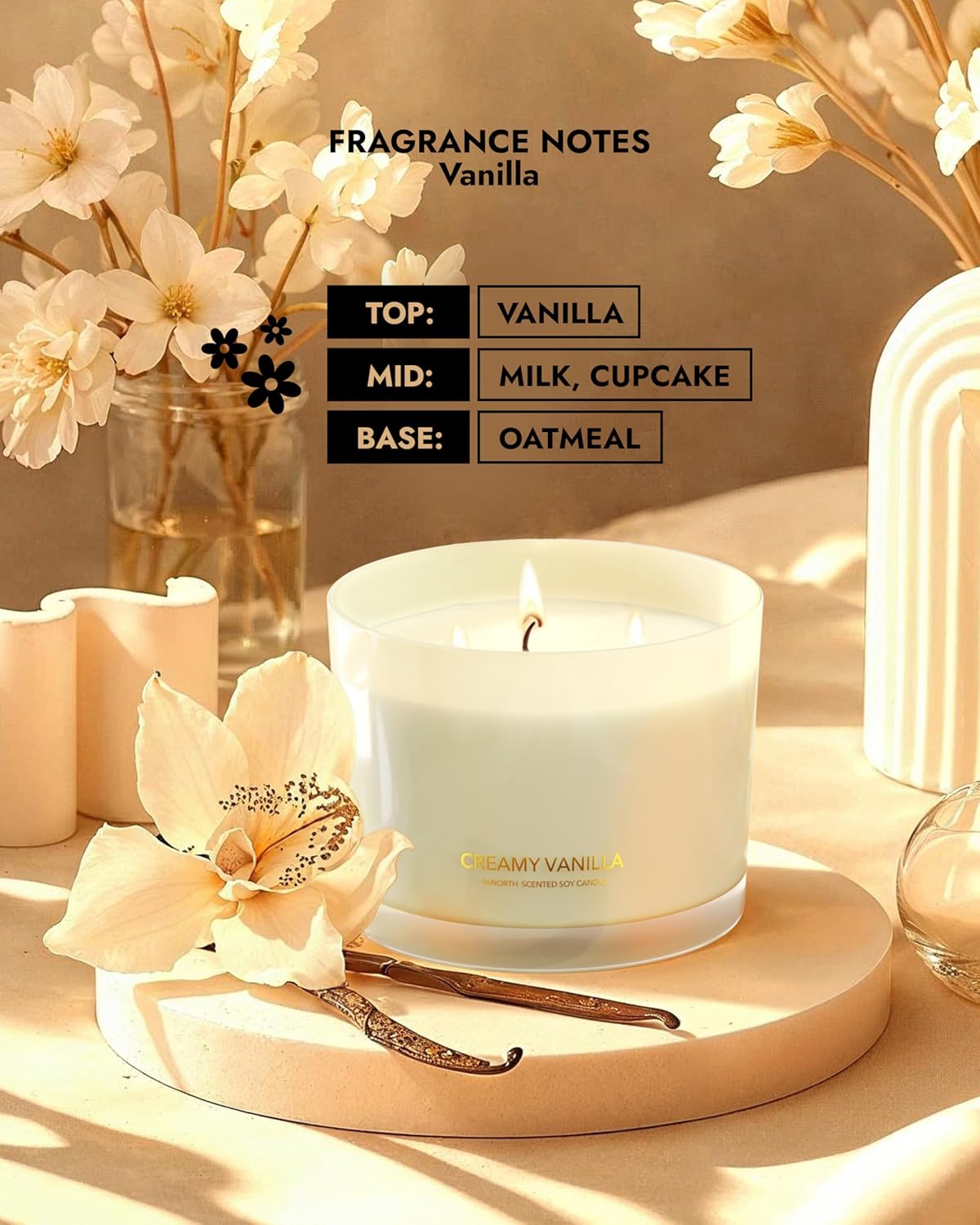
If you are highly scent-sensitive, start with simple, minimalist profiles. You can choose a candle scent with grounding, clean notes to safely elevate your domestic sanctuary.

4. The "Soy Blend" Illusion: Decoding Greenwashed Labels
A candle labeled "made with soy" can legally contain up to 90% paraffin, one of the primary candle ingredients to avoid. Brands use vague terms like "vegetable blend," "proprietary wax blend," or "soy blend" to mimic eco-friendly products while hiding cheap petroleum. Without a precise breakdown, you cannot predict soot production, chemical headaches, or scent throw.
Protect your indoor air quality with these shopping rules:
-
Seek absolute clarity: Choose "100% soy wax" or named combinations like "coconut and soy" from brands that fully disclose their formulas.
-
Verify exclusions: Look for explicit brand statements guaranteeing zero paraffin and lead-free cotton wicks.
True ingredient transparency always beats clever marketing buzzwords for your peace of mind.
5. The Wick Safety Check: Easy Labels for Clean Burning
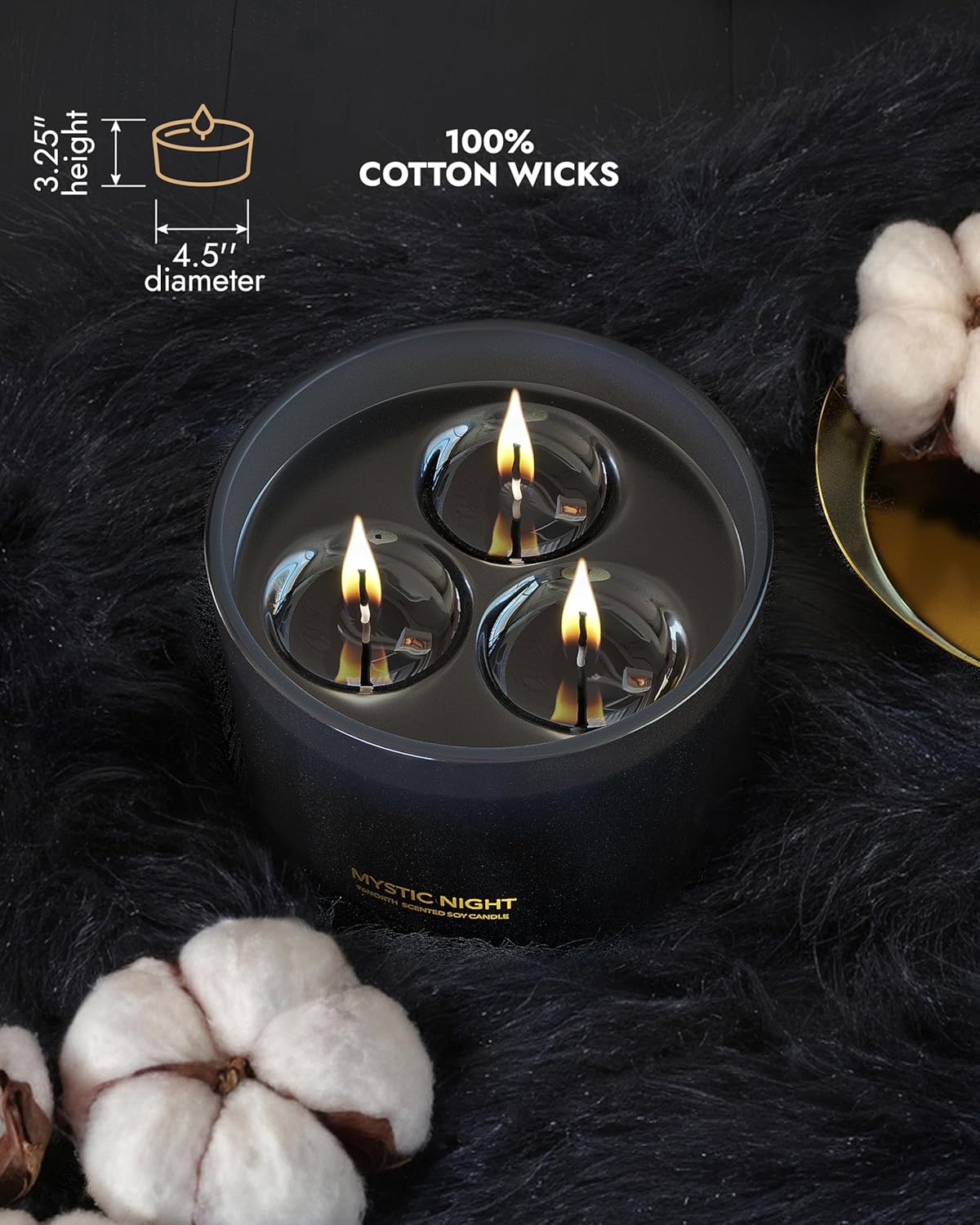
Checking your candle wick is a simple, highly effective way to protect your indoor air quality. While the US banned lead-core wicks in 2003, cheap imports still bypass safety standards. Because wick materials directly impact the soot and chemicals released into your home, always look for transparent labeling.
Prioritize these safe materials:
-
100% cotton wick
-
Lead-free cotton
-
Cotton and paper core
-
Wood wick
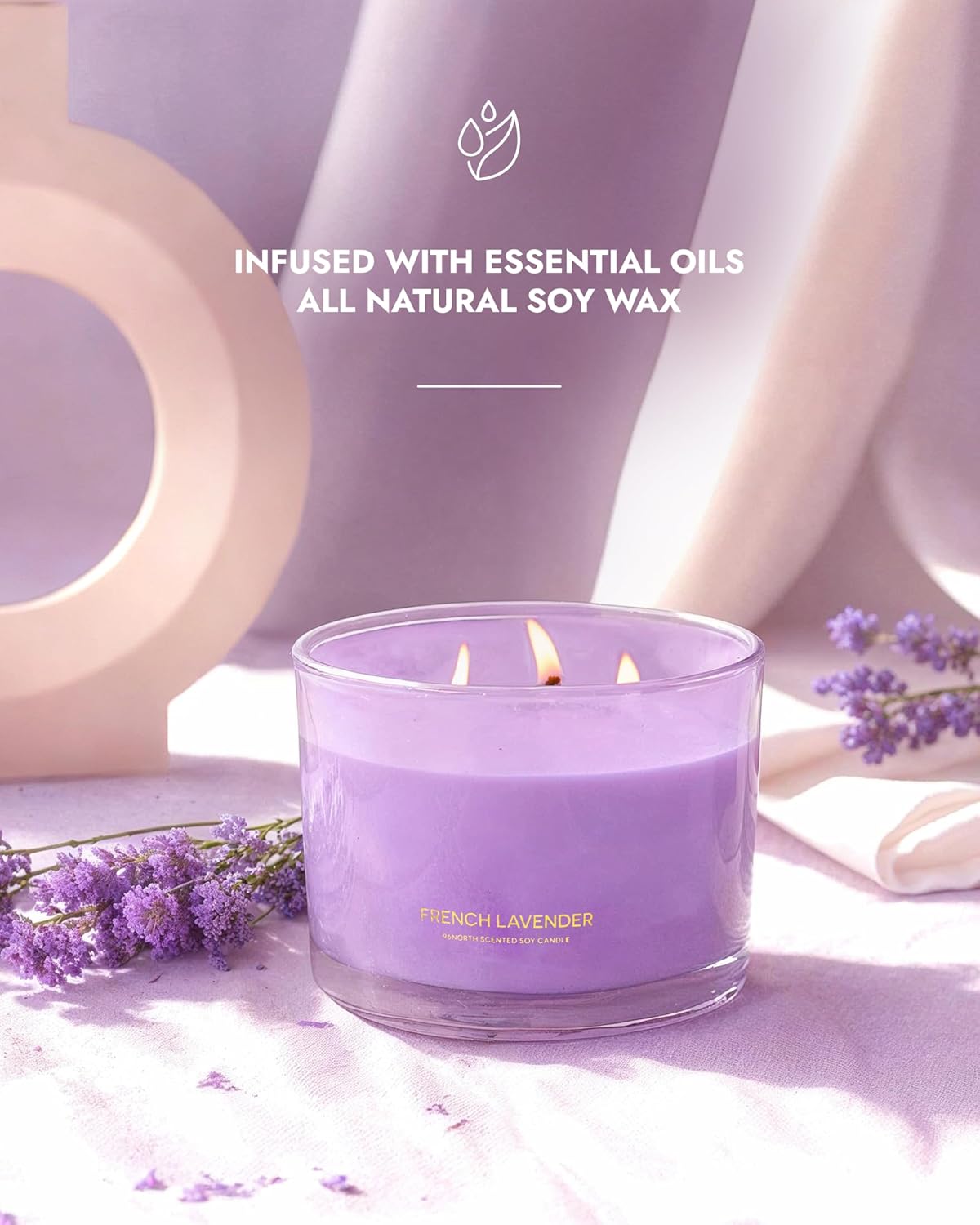
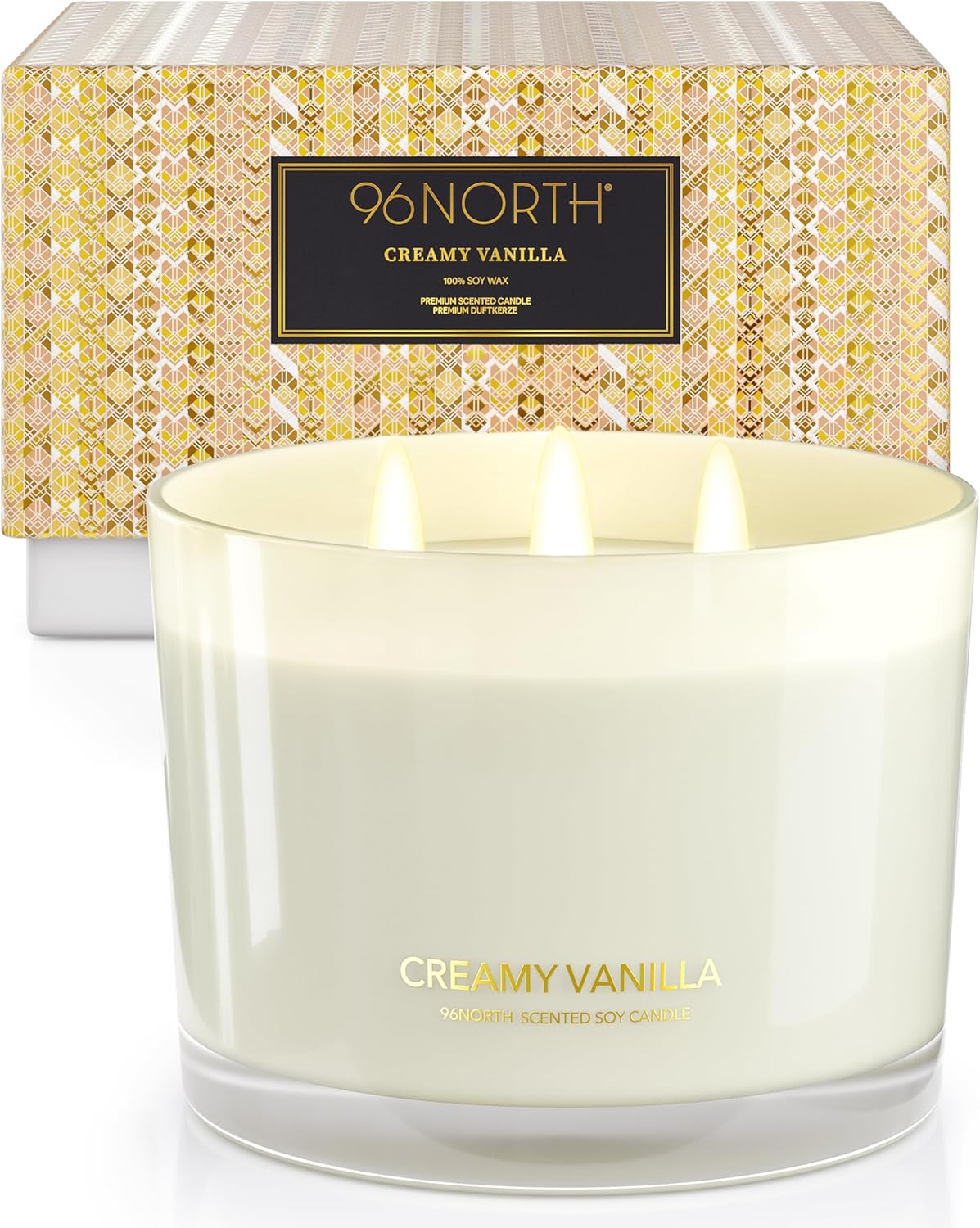
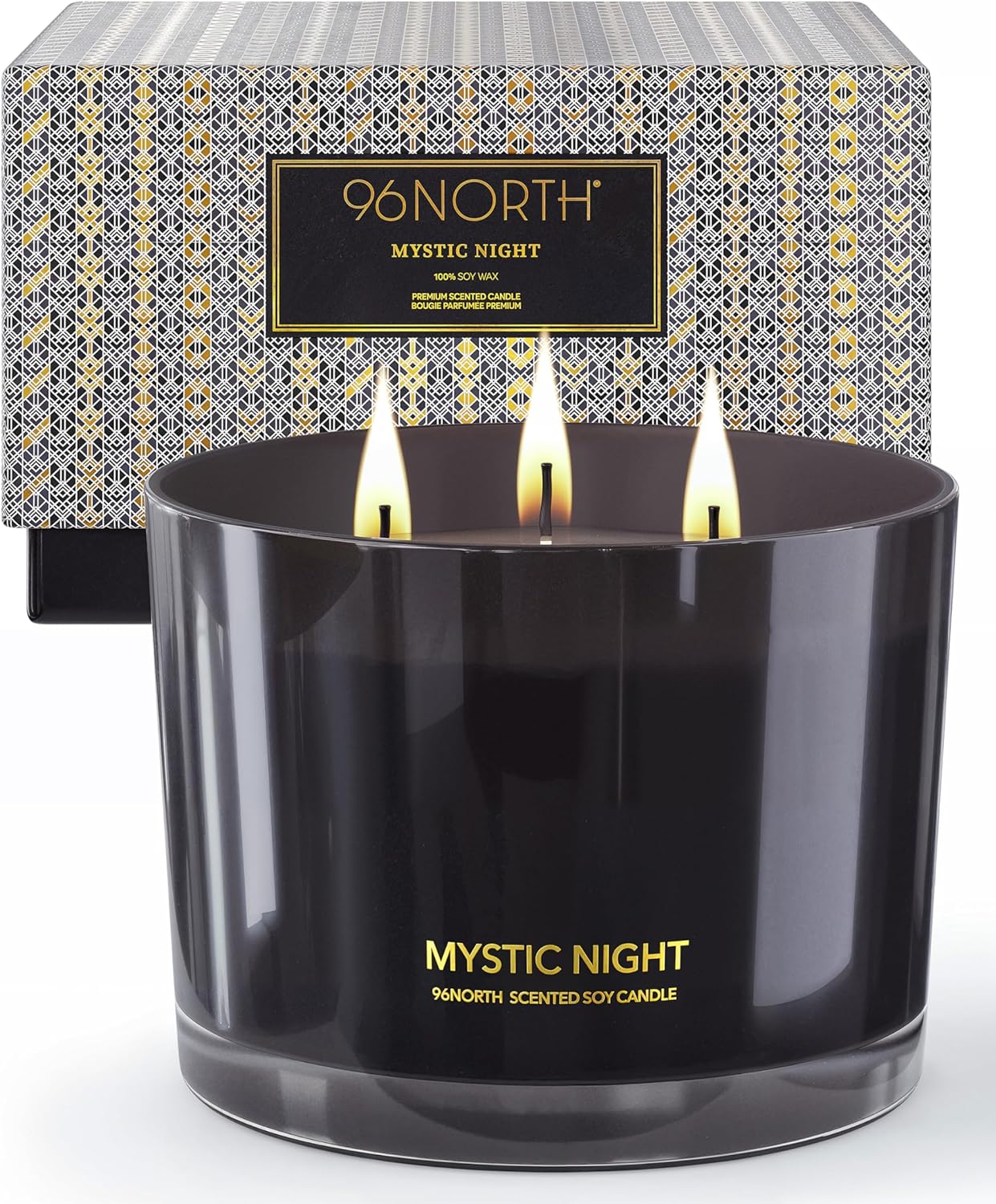
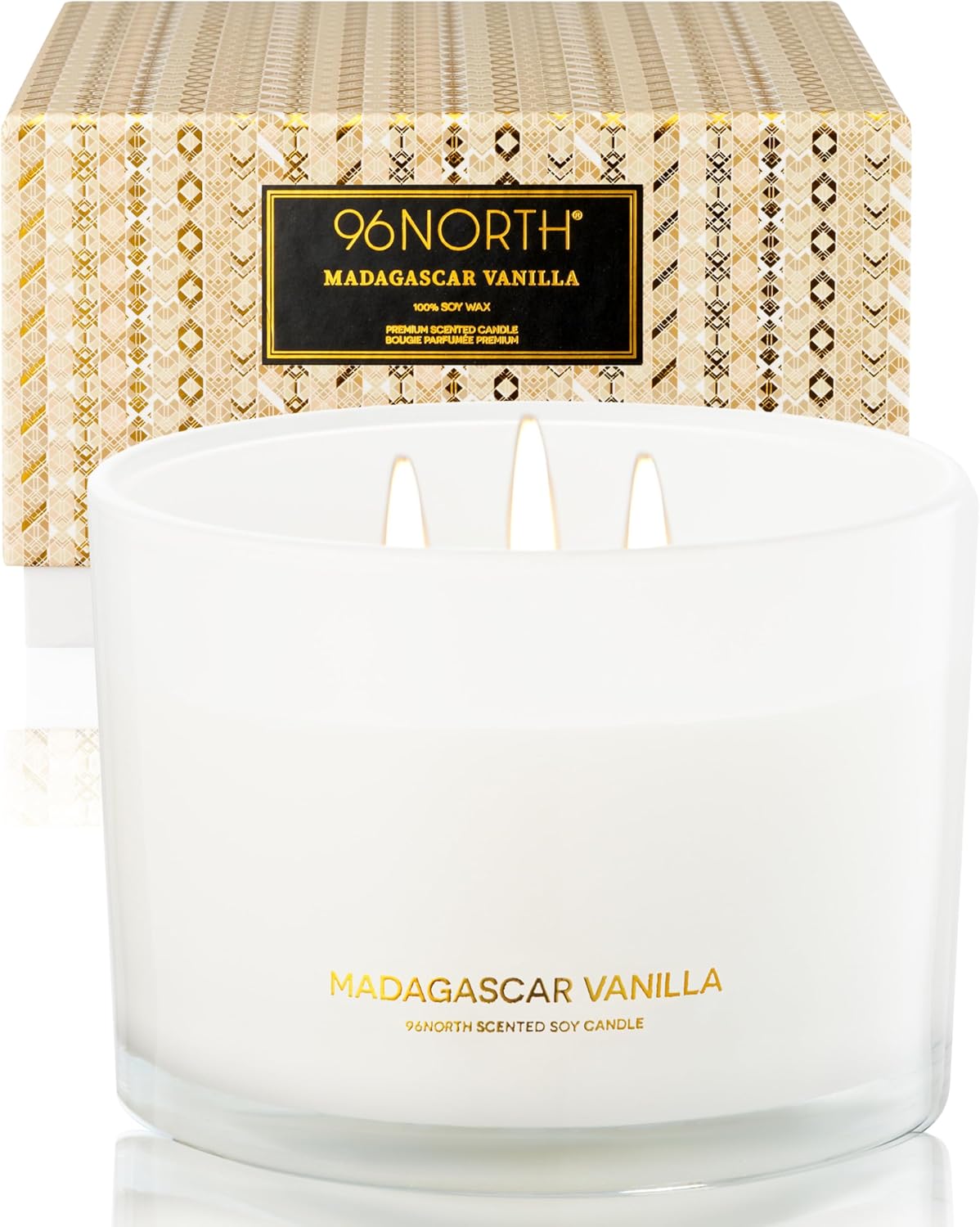
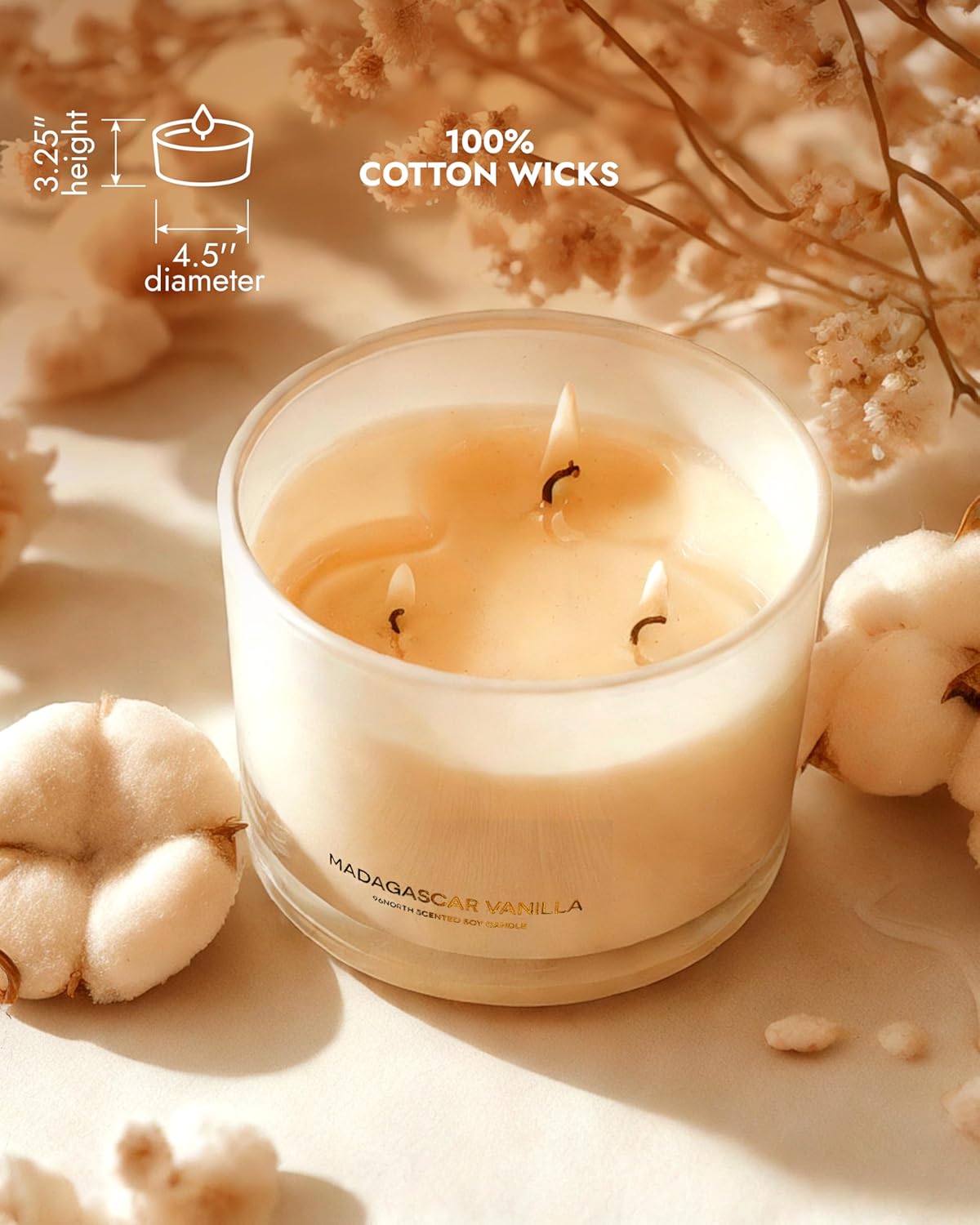
Treat undisclosed wick materials as a red flag. Instead, choose brands that commit to untreated, lead-free fibers engineered for a clean, stable burn. For example, 96NORTH pairs 100% natural soy wax with premium lead-free cotton wicks to deliver a soothing, soot-free sensory experience.
6. The Aesthetic Trap: Why Pretty Add-Ins Disrupt Your Burn
Aesthetically pleasing candles often sacrifice indoor air quality. Visually loaded designs rely on common candle ingredients to avoid:
-
Glitter and mica
-
Dried botanicals and crystals
-
Intensely colored wax
These additives disrupt the burn cycle. As they melt, they clog the wick, causing heavy soot, dirty jar walls, and an inconsistent melt pool.
If a candle is visually loaded, look for explicit clean-burn claims and wick-trimming instructions. The healthier alternative is a minimal-additive wax with a well-matched wick. A strong throw comes from precise oil formulation, not decorative add-ins. The scented candle history timeline reveals that top-performing candles always prioritize clean-burning simplicity.
7. The Essential Oil Assumption: Why "Natural" Isn't Always Safer
Many buyers use a "100% essential oil" label as proof of safety. However, "natural" does not mean non-irritating. High-potency plant oils can trigger respiratory distress in sensitive individuals and pose severe toxicity risks to cats, dogs, and birds.
Protect your household with this safety framework:
-
Prioritize transparency: Choose low-smoke, fully disclosed formulas and ensure active ventilation over relying on "natural" buzzwords.
-
Practice clean burn habits: Keep burn times under four hours, maintain a stable melt pool, and trim wicks regularly to prevent soot.
Remember, evaluating candle ingredients to avoid extends beyond the ingredient list. True safety requires reading the warning panels and burn instructions on the bottom label.
8. The Transparency Test: When to Walk Away
Vague marketing terms like "clean" or "eco" often mask toxic candle ingredients to avoid. If a brand hides its specific wax, wick, or fragrance standard, walk away. Without these details, you cannot evaluate safety or performance.
Before buying, verify transparency with this checklist:
-
Specific wax and wick disclosures: Look for explicitly listed bases like 100% soy and lead-free cotton.
-
Fragrance safety standards: Ensure the brand publishes its compliance with strict phthalate-free standards.
-
Detailed care instructions: Thorough burn and wick-trimming guidance indicate a professionally formulated product.
If you value transparency, shop brands that publish their standards up front. Discover a fully disclosed, clean sensory experience at 96NORTH.
How to Shop for Non-Toxic Candles: A 6-Step Label Workflow
Follow this systematic verification protocol to easily identify key candle ingredients to avoid and choose clean products.
Step 1: Start with Wax Disclosure
Scan the label for the wax source.
-
Green Flag: Choose explicitly named natural bases like 100% soy wax or coconut blend.
-
Red Flag: Reject generic "wax blend" claims without percentage breakdowns, which often conceal cheap paraffin.
Step 2: Check Wick Materials
Inspect the core components. Verify the label specifies lead-free cotton or paper. Avoid brands that withhold wick details entirely.
Step 3: Decode Fragrance Language
Look past vague marketing terms. Require phthalate-free formulas as your absolute baseline. Select brands that show IFRA-aligned sourcing, allergen transparency, or offer a Safety Data Sheet (SDS) on request.
Step 4: Scan for Burn Instructions
Look for first-burn guidance, trim instructions, and maximum burn limits. Clear instructions serve as a quality proxy for clean-burning formulations.
Step 5: Prioritize Low-Smoke for Sensitive Homes
Protect children and pets by avoiding heavily dyed waxes and botanical add-ins. Always burn candles in ventilated areas and limit session times.
Step 6: Shop with Confidence
Learn how scented candles work to protect your indoor air quality. Once you know which candle ingredients to avoid, confidently choose a candle scent that elevates your environment. Explore clean-burn standards with 96NORTH today.
Frequently Asked Questions
Are "soy blend" candles bad?
Not necessarily, but the main issue is undisclosed percentages. A brand labeling a candle as a "soy blend" can legally use up to 90% cheap paraffin wax while marketing it as eco-friendly. Always choose 100% soy wax or brands that clearly disclose their exact blend percentages. Avoid vague terms like "vegetable blend." See The "Soy Blend" Illusion above for details.
What does "phthalate-free" actually mean on a candle?
A phthalate-free label means the fragrance oils exclude phthalates, which are plasticizing chemicals linked to hormone disruption. However, this is only one screening point. It does not guarantee a completely safe candle. Look for broader safety profiles, such as IFRA compliance, ingredient transparency, and published chemical exclusions.
Why does a clean candle sometimes have a warning label like Prop 65?
California's Prop 65 warnings trigger at incredibly low regulatory thresholds, even for trace amounts of natural organic compounds found in pure essential oils. A warning does not mean a candle is toxic or unsafe. Always check which specific chemical the warning references and contact the brand to clarify their sourcing.
Are essential oil candles safer for headaches, asthma, or pets?
Not always. Natural does not mean non-irritating. High-potency plant oils can still trigger respiratory distress, cause sinus headaches, or prove highly toxic to dogs and cats. To reduce risks, prioritize room ventilation, keep burn sessions under four hours, and choose minimal-additive waxes.
What ingredients should I look for if I want a cleaner candle?
Look for explicitly named natural bases like 100% soy, coconut, or beeswax. Ensure the wick is made of lead-free cotton, and prioritize transparent fragrance standards. If you want a clean, soot-free sensory experience for your home, explore the premium wellness collection at 96NORTH.