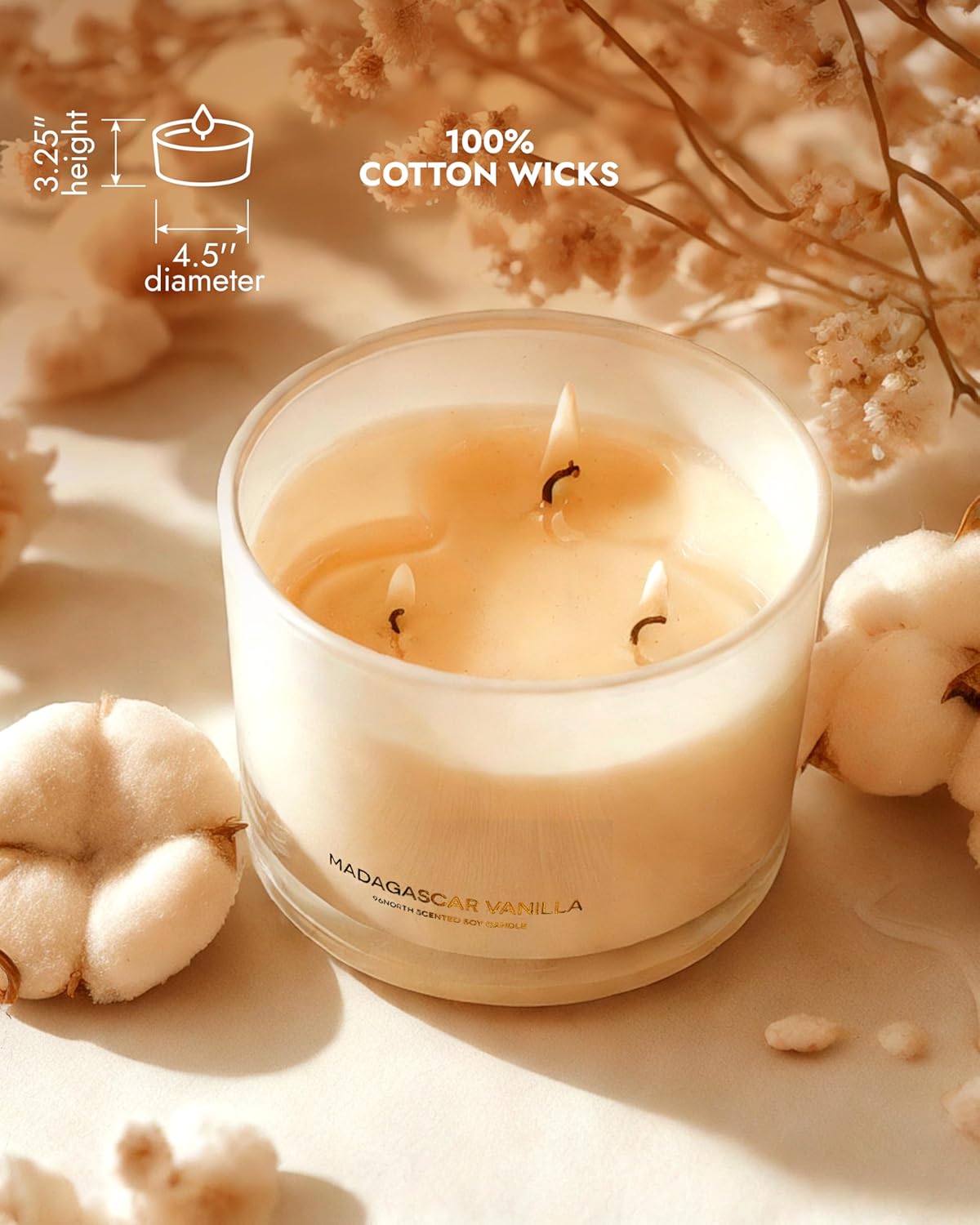

Candles can add light and fragrance to a room, but every burning candle is an open flame. Safe use depends on supervision, careful placement, appropriate accessories, and following the instructions supplied with the candle and its container.
The following tools can make routine candle use easier and reduce common risks such as unstable flames, hot surfaces, wax splatter, and accidental contact. No accessory replaces active supervision, working smoke alarms, or basic fire-safety precautions.
10 Candle Safety Tools to Consider
1. 96NORTH Ivory Taper Candles

96NORTH Ivory Taper Candles are unscented decorative candles designed for standard holders and dining-table displays. Their narrow format makes holder fit, vertical positioning, and draft-free placement especially important. Always secure each taper in a stable, heat-resistant holder before lighting it.
• Lead-free cotton wicks.
• Drip-resistant design positioning.
• Clean-burning wax blend.
• Standard 7/8-inch base designed for common taper holders.
• Unscented ivory finish.
Pros:
• Neutral appearance works with many table settings.
• Unscented format is suitable for meals and fragrance-sensitive settings.
• Standard base makes compatible holders easier to find.
Cons:
• Requires a secure, upright holder on a level surface.
• Drafts can cause uneven burning or dripping.
• The candle and holder can become hot during use.
Best For: Dining tables, mantels, and seasonal displays where a stable taper holder and continuous supervision are available.
View 96NORTH Ivory Taper Candles
2. Stainless Steel Candle Snuffer
A candle snuffer extinguishes a flame by covering it with a small bell. The long handle keeps hands farther from the flame and can reduce wax splatter compared with blowing directly across a liquid wax pool.
• Long handle.
• Pivoting or angled bell.
• Stainless steel construction.
• Suitable for many jar candles and tapers.
Pros:
• Keeps the hand farther from the flame.
• Can reduce wax splatter.
• Simple to use on candles with an accessible flame.
Cons:
• The bell can become hot after use.
• Oversized or deep vessels may be difficult to reach.
• Requires cleaning if soot collects inside the bell.
Best For: Regular candle users who want a controlled way to extinguish an accessible flame.
3. Electric Candle Warmer Lamp
A candle warmer lamp uses an overhead bulb to melt scented wax without lighting the wick. It removes the candle flame from the setup, but the bulb, shade, wax, and vessel can still become hot, so the lamp should be used on a stable surface according to the manufacturer instructions.
• Adjustable heat or brightness settings on many models.
• Timer function on selected models.
• Top-down warming design.
• Sized to fit many standard candle jars.
Pros:
• Releases fragrance without lighting the wick.
• Timer models can provide an automatic shutoff.
• Doubles as ambient lighting.
Cons:
• Requires electricity.
• The bulb and wax can become hot.
• Bulbs eventually require replacement.
• Not every vessel is suitable for warming.
Best For: Desks or living areas where an electric warmer can be placed securely and monitored according to its instructions.
4. LED Flameless Moving-Flame Candles
LED flameless candles imitate the appearance of a flickering flame without combustion or hot wax. They are useful where an open flame is inappropriate, although battery compartments and small components should still be kept away from young children.
• LED moving-flame effect.
• Battery-powered operation.
• Remote control on many sets.
• Built-in timers on selected models.
• Real-wax or molded-plastic exterior options.
Pros:
• No open flame or melted wax.
• Can be used in areas with stricter fire rules.
• Timer and remote features simplify repeated use.
Cons:
• Does not provide candle fragrance.
• Batteries require replacement or charging.
• Real-wax exteriors can soften near heat sources.
Best For: Homes with pets or children, rental properties, dorms, and decorative displays where open flames are restricted.
5. Matte Black Wick Trimmer
A dedicated wick trimmer reaches into deep jars and clips the wick while catching much of the debris. Follow the candle label for the recommended wick length; many candle makers advise trimming to about 1/4 inch before relighting.
• Long handles for deep candle jars.
• Angled cutting blades.
• Debris-catching plate.
• Metal construction.
Pros:
• Makes deep jar wicks easier to reach.
• Helps remove mushroomed wick material.
• Catches clipped wick debris.
Cons:
• Blades can dull over time.
• Soot residue must be cleaned from the tool.
• Over-trimming can make a wick difficult to relight.
Best For: Jar-candle owners who need a clean, controlled way to maintain wick length.
6. Heat-Resistant Marble Candle Coaster
A heat-resistant coaster or tray creates a stable barrier between a candle vessel and the furniture below it. The surface should be level, large enough for the candle, and positioned where it cannot be bumped or pulled down.
• Stone, ceramic, or other heat-resistant material.
• Wide, level surface.
• Non-slip base on selected designs.
• Available in sizes for jars and tapers.
Pros:
• Helps protect furniture from heat and wax.
• Adds stability beneath a candle vessel.
• Can be reused with different candles.
Cons:
• Stone can stain if wax is not removed promptly.
• A coaster does not make an unsafe location suitable.
• Heavy materials can scratch furniture without a protective base.
Best For: Wooden tables, shelves, and other surfaces that need a stable heat-resistant barrier.
7. Rechargeable Plasma Arc Lighter
A long-reach plasma lighter uses an electric arc instead of a butane flame. The extended neck helps keep fingers away from deep candle jars, while a safety switch can reduce accidental activation when the lighter is stored.
• USB-rechargeable battery.
• Long or flexible neck.
• Safety lock switch.
• Wind-resistant electric arc.
Pros:
• Keeps hands farther from the wick.
• Does not require disposable butane refills.
• Useful for deep jars and lanterns.
Cons:
• Requires charging.
• Produces a high-pitched sound during use.
• The electric arc must be kept away from skin and flammable vapors.
Best For: Deep candle jars and users who prefer a rechargeable long-reach lighter.
8. Glass Hurricane Candle Sleeve
A properly sized hurricane sleeve can shield a candle from light drafts and accidental contact. It must be designed for candle use, provide adequate airflow, and leave safe clearance around the flame. The glass can become extremely hot.
• Heat-resistant glass construction.
• Open top for airflow.
• Wide base for stability.
• Protective barrier around the flame.
Pros:
• Helps shield the flame from light air movement.
• Creates a visible barrier around the candle.
• Can enhance the decorative glow.
Cons:
• Glass becomes hot during use.
• Incorrect sizing can trap heat or restrict airflow.
• Fragile if knocked over or dropped.
Best For: Decorative candle displays using a sleeve specifically rated and sized for the candle.
9. Candle Dipper Tool
A candle dipper uses a small hook to lower a wick briefly into the liquid wax and lift it upright again. This can extinguish the flame with less smoke, but it requires a stable wax pool and careful handling to avoid burying or shifting the wick.
• Angled hook.
• Long slim handle.
• Stainless steel construction.
• Designed for jar candles with a liquid wax pool.
Pros:
• Keeps hands away from the flame.
• Can reduce post-extinguishing smoke.
• Coat the wick with wax for the next lighting.
Cons:
• Cannot be used before a wax pool forms.
• The wick can become buried or moved off-center.
• The tool needs cleaning after use.
Best For: Experienced jar-candle users who prefer a low-smoke extinguishing method.
10. Compact Household Fire Extinguisher
A suitable household fire extinguisher is an important backup wherever open flames are used. Choose a model rated for the types of fires that may occur in the home, keep it accessible, review its instructions, and replace or service it by the stated date.
• Clear fire-class rating.
• Pressure or condition indicator on applicable models.
• Safety pin and discharge nozzle.
• Wall bracket or accessible storage option.
• Manufacturer inspection and replacement instructions.
Pros:
• Provides a response option for a small fire when it is safe to act.
• Can be stored near common household risk areas.
• Clear labels support emergency use.
Cons:
• Requires inspection, maintenance, or replacement.
• Discharge can create residue and reduce visibility.
• Should not delay evacuation or calling emergency services.
Best For: Every household using candles or other open flames, alongside working smoke alarms and an emergency plan.
The Essential Guide to Candle Safety
Keep Every Burning Candle Within Sight
Never leave a burning candle unattended. Extinguish it before leaving the room, going to sleep, or becoming distracted by another task. An electric warmer with a timer may remove the open flame, but it should still be used and monitored according to its manufacturer instructions.
Use a Stable, Heat-Resistant Location
Place candles on a level, heat-resistant surface where children and pets cannot reach or knock them over. Keep the flame away from curtains, furniture, books, decorations, plants, and other materials that can catch fire. Avoid drafts from open windows, fans, and air vents.
Follow Wick and Burn-Time Instructions
Read the candle label before use. Trim the wick to the stated length, keep the wax pool free from matches and debris, and stop burning the candle when the manufacturer says to do so. Do not continue using a damaged vessel, a candle with an unstable flame, or a jar that becomes excessively hot.
Extinguish the Flame Carefully
Use a snuffer, the candle lid if it is designed for extinguishing, or another method approved by the manufacturer. Do not pour water into hot wax or onto a burning candle because it can spread hot wax and worsen the situation. Allow the vessel and wax to cool completely before moving or handling them.
Prepare for a Fire Emergency
Keep smoke alarms working and maintain an appropriate household fire extinguisher. If a candle fire cannot be controlled immediately and safely, leave the area, close the door if possible, call emergency services, and do not re-enter the property.
Conclusion
The most useful candle-safety tools are the ones that support consistent habits: a stable base, a properly maintained wick, a controlled extinguishing method, and a safer alternative when an open flame is unsuitable. Accessories can reduce common risks, but supervision and careful placement remain essential.
For candle users who prefer a traditional table display, 96NORTH Ivory Taper Candles can be paired with secure holders and a heat-resistant surface. Follow the product instructions, keep the flame within sight, and extinguish every candle before leaving the room.
Frequently Asked Questions
Are soy candles safer than paraffin candles?
Wax type does not remove the main fire risks associated with an open flame, hot wax, and a heated container. Compare the complete candle design, follow the label, keep the candle supervised, and use it on a stable heat-resistant surface.
What should I do if a candle flares up or catches nearby material?
If it is safe to do so, use a snuffer, a suitable metal lid, or the correct household fire extinguisher. Do not pour water into burning wax. If the fire spreads or cannot be controlled immediately, leave the area and call emergency services.
Why can a candle jar crack?
A jar may crack because of overheating, damage, uneven heating, debris in the wax, or use beyond the manufacturer limits. Stop using any vessel with chips or cracks, follow the recommended burn time, and extinguish the candle before it reaches the minimum wax level stated on the label.